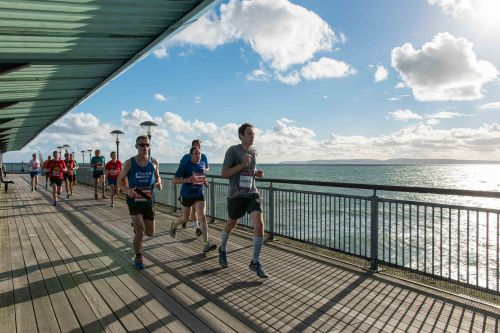
The Run Bournemouth 10K is a flagship mass participation running event that forms a core part of the wider Run Bournemouth weekend. Set along England’s south coast, the event combines a scenic seaside route with a professionally managed event-day experience designed to welcome thousands of participants of all abilities. From first-time 10K runners and charity fundraisers to experienced runners looking for a well-organised coastal event, the Run Bournemouth 10K attracts a diverse field each year.
Although the distance is shorter than a half marathon, the scale of the event and the coastal setting mean that understanding what to expect on event day is just as important. From arriving in Bournemouth and navigating the start area to crossing the finish line and collecting your medal, the day follows a clear structure designed to support participants from start to finish.
Arriving in Bournemouth and Preparing for Event Day
Event day for the Run Bournemouth 10K typically begins earlier than many participants anticipate. Bournemouth is a popular destination, and the Run Bournemouth weekend attracts large numbers of runners, spectators, and visitors. Road closures, restricted access zones, and increased foot traffic are all part of the event’s logistics.
Many participants travel from outside the area or stay overnight in Bournemouth or nearby towns. Public transport, event-organised travel options, and designated drop-off points are commonly used. Allowing extra time for travel is strongly recommended, as queues and congestion are normal on event morning.
Searches such as “Run Bournemouth 10K start location” and “how to get to Run Bournemouth 10K” are common ahead of the event, highlighting the importance of understanding arrival logistics in advance.
Registration, Bib Collection, and Event-Day Assistance
For most participants, registration and bib collection are completed before event day, either via postal delivery or through a pre-event collection process. On the day itself, activity within the event village focuses on support rather than registration.
Information desks and help points are clearly signposted and staffed by knowledgeable volunteers. These teams assist with queries about start times, wave placement, facilities, and accessibility, providing reassurance for participants who may be new to organised events.
Your bib number is your primary identifier throughout the Run Bournemouth 10K. It links you to timing systems, medical information if required, and official results. Ensuring it is securely attached before arriving at the start area avoids unnecessary last-minute stress.
Bag Drop and Managing Personal Belongings
The Run Bournemouth 10K provides a bag drop service for participants who need to leave belongings at the start and collect them after finishing. Bag drop areas are clearly organised, typically structured by bib number ranges to manage the high volume of participants efficiently.
Queues increase closer to start time, so completing bag drop early helps maintain a calm mindset. Only essential items should be placed in your bag, as you will not have access to it again until after finishing.
Many participants search for “Run Bournemouth 10K bag drop” ahead of event day, reflecting how important this stage is in shaping a smooth and stress-free experience.
Toilets, Warm-Up, and Final Preparations
Toilet facilities are provided in large numbers, but demand rises significantly as the start approaches. Using the facilities earlier rather than waiting until the last possible moment helps reduce anxiety and allows participants to focus on preparation.
Final preparations often include gentle movement, light stretching, and mental focus. The coastal setting contributes to a relaxed yet energising atmosphere, with sea air and open space adding to the experience. Some participants prefer quiet preparation, while others draw energy from the surrounding crowds and music.
This is also the stage where final checks of footwear, clothing, and any carried items are completed.
Moving Into the Start Pens and Wave System
To manage participant flow safely and comfortably, the Run Bournemouth 10K uses a wave-based start system. Participants are allocated to start waves based on predicted finish times or designated categories.
Clear signage, announcements, and volunteer guidance help direct participants into the correct start pens. Once inside a pen, movement becomes limited, so it is important to have completed all preparations beforehand.
The wave system reduces congestion in the early kilometres and allows participants to settle into pace naturally along the seafront route.
The Start Line Experience
The start of the Run Bournemouth 10K is energetic and well organised, with music, announcements, and crowd support creating a strong sense of anticipation. Each wave begins at a scheduled time, and it is completely normal for several minutes to pass between the official start and when an individual participant crosses the timing mats.
This delay does not affect official finish times. Treating the opening moments as an extension of your warm-up helps conserve energy and avoid starting too fast.
Search queries such as “what happens at the start of Run Bournemouth 10K” are common, making reassurance about this process particularly valuable.
Early Kilometres and Finding Your Rhythm
The opening kilometres of the Run Bournemouth 10K are about finding rhythm and adjusting to the coastal environment. The excitement of the event and the supportive atmosphere can make early pacing feel easier than expected.
Clear kilometre markers, signage, and marshals help participants stay oriented. Aid stations are positioned along the route, offering water and support if needed.
Focusing on steady, controlled effort early on helps ensure a more enjoyable experience and prevents fatigue later in the event.
Course Atmosphere, Support, and Safety
The Run Bournemouth 10K route takes participants along prominent seafront sections and nearby urban streets, creating a lively and visually engaging experience. Spectator support is strong in many areas, with quieter stretches allowing participants to focus inwardly.
Volunteers line the course, offering encouragement, guidance, and reassurance throughout. Medical teams are positioned along the route and at the finish area, ensuring participant safety at all times.
Clear signage, marshalled junctions, and visible support staff help maintain smooth flow and a positive atmosphere.
Approaching the Finish Line
As participants move into the later stages of the Run Bournemouth 10K, fatigue may begin to build, particularly for those new to the distance. The final kilometres are clearly signposted, and the atmosphere becomes increasingly celebratory as the finish line approaches.
The finish area is designed to feel welcoming and inclusive. Crossing the finish line represents a significant achievement, whether it is a first 10K, a charity milestone, or part of a broader running journey.
Timing mats record official results, and volunteers immediately guide participants into post-finish areas.
After You Finish: Recovery and Event Exit
After finishing, participants move through a recovery zone where water, medals, and post-event support are provided. This area allows runners to slow down safely, catch their breath, and reorient.
Medical support remains available for anyone who needs assistance. Clearly marked exit routes and meeting points help participants reconnect with friends, family, or supporters and plan onward travel.
Reflecting on the Run Bournemouth 10K Experience
The Run Bournemouth 10K is more than a short-distance event. It is a carefully organised mass participation experience designed to support participants at every stage of the day.
Understanding what to expect from arrival and registration through to the finish line removes uncertainty and allows participants to approach the event with confidence. When logistics feel predictable, runners are free to focus on enjoyment, personal goals, and the satisfaction that comes from taking part in a coastal running event.